I’ll never forget my first attempt at a “great” steak dinner. I was trying to impress, you know how. I bought a nice, thick-cut ribeye, seasoned it lovingly, and threw it in a hot pan. The smoke alarm went off, the outside was charred, and the inside? A sad, gray band around a rare center. It was an expensive disaster. However, that failure sent me down a rabbit hole that changed my cooking forever: sous vide.
“Sous vide,” which means “under vacuum” in French, is a cooking technique in which food is vacuum-sealed and slowly cooked at a precisely controlled temperature in a water bath. The result? Restaurant-quality food at home.
Imagine a steak cooked perfectly medium-rare. No guesswork, no dry spots – just juicy, tender perfection every time. That’s the power of sous vide. And with the right equipment, anyone can do it.
Contents
- 1 Welcome to the World of Precision Cooking!
- 2 Why Sous Vide Is the Secret Weapon of Modern Kitchens
- 3 💡 What Is Sous Vide Cooking?
- 4 The Absolute Must-Haves: Your Sous Vide Tools Starter Pack
- 5 Level Up Your Game: Tools That Make Sous Vide Effortless
- 6 Why You Need the Right Tools for Sous Vide Success
- 7 The “Nice-to-Have” Gadgets for the Enthusiast
- 8 ⚠️ Common Mistakes to Avoid
- 9 Final Thoughts: Why These Tools Are Worth It
- 10 FAQ
Welcome to the World of Precision Cooking!
If you’ve ever been disappointed by overcooked or undercooked steak, ‘sous vide’ is about to become your new best friend. Once used exclusively in top restaurants, this French technique now plays a vital role in the modern home kitchen – and for good reason. But here’s the problem: having the right equipment makes all the difference.
Why Sous Vide Is the Secret Weapon of Modern Kitchens
Sous vide cooking—once the secret technique of elite chefs—has now transformed into a mainstream culinary movement. What’s the promise? Perfect preparation, unparalleled flavor, and no guesswork. But the magic of sous vide isn’t just in the water bath—it’s in the tools that bring restaurant-quality food to your kitchen. Let’s explore the essential sous vide cooking tools that every home cook needs to up their game.
💡 What Is Sous Vide Cooking?
The Science Behind the Method
Sous vide, which means “under vacuum” in French, is a method where food is vacuum-sealed in a bag and cooked in a water bath at a very precise, consistent temperature. It ensures perfect doneness from edge to edge—no more dry chicken or rubbery shrimp.
How It Enhances Flavor and Texture
Because the food is sealed, it retains its juices, marinades, and natural flavors without drying out. The result? Buttery tender steaks, silky smooth eggs, and vegetables that retain their color and crunch.
The Absolute Must-Haves: Your Sous Vide Tools Starter Pack
You can’t get started without these two core pieces of equipment. Think of them as the dynamic duo of precision cooking.
1. The Immersion Circulator: The Heart of the Operation:
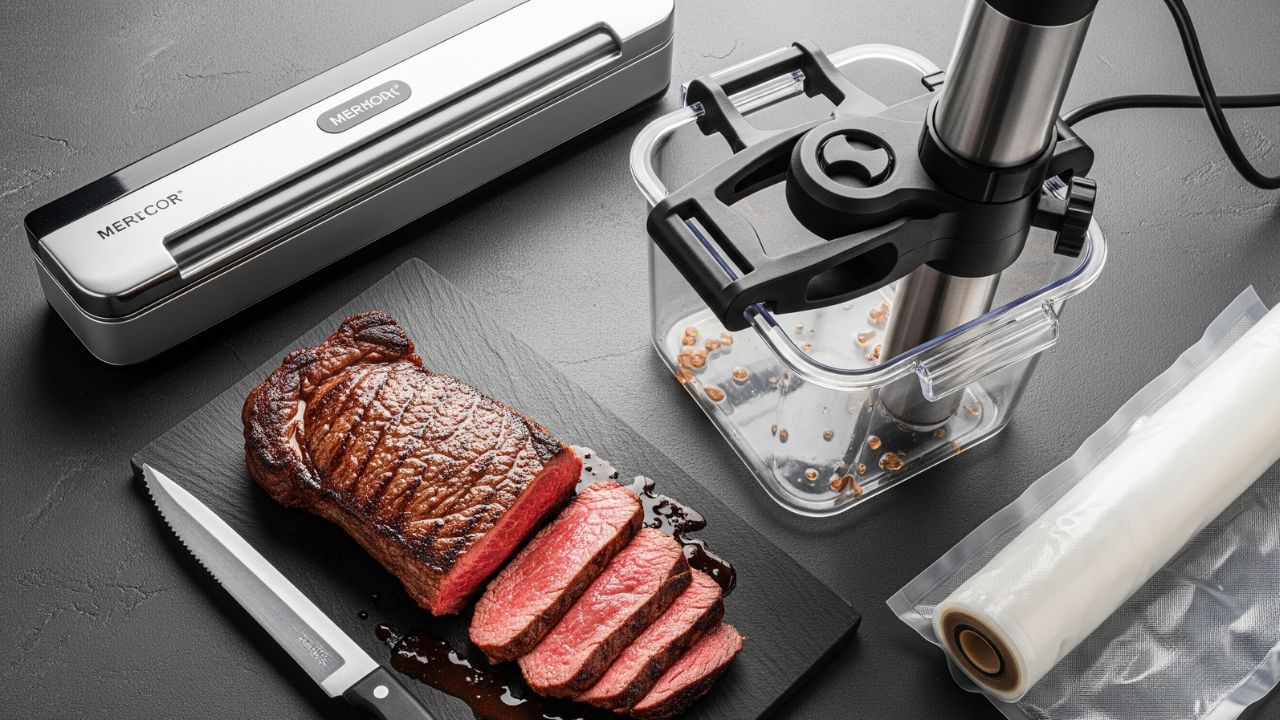
An immersion circulator is a device that you stick to the side of a pot or container. It heats water to a specific temperature and circulates it continuously, creating a completely stable thermal environment. Why is it so important? It takes the guesswork out of it.
A steak cooked at 57.2∘°C (135∘F) will be a perfect medium-rare, every single time. There’s no “oops, I overcooked it.” The magic is in the precision. When shopping for one, look at three key things:
- Wattage: Higher wattage (1000W+) means the circulator can heat your water bath faster and maintain the temperature more effectively, especially with larger cooks.
- Flow Rate: Measured in gallons or liters per minute, a strong flow rate ensures there are no hot or cold spots in your container. You want that water moving!
- Temperature Accuracy: Most modern circulators are incredibly accurate, often within ±0.1∘C. This level of control is what makes sous vide so revolutionary for cooking proteins, where a single degree can change the texture.
My Anova circulator once saved a $100 brisket. It was a 36-hour cook, and a lesser machine might have struggled to maintain the temperature, leading to uneven results. Instead, I got the most tender, melt-in-your-mouth brisket of my life. That’s the power of a great circulator.
2. A Reliable Vacuum Sealer: The Secret to Perfection
The term “sous vide” literally means “under vacuum” in French. The point is to remove the air from the bag your food is in. Air is a terrible conductor of heat, causing the bags to swell and resulting in unevenly cooked food – which is exactly what we’re trying to avoid.
A vacuum sealer is your best friend in your kitchen. It removes all the air and creates a tight seal, ensuring maximum contact between the food and the hot water. You have two main types:
- Edge (or Suction) Sealers: These are the most common and affordable for home use. You place the open end of a textured bag into the machine, and it sucks the air out before heat-sealing it shut.
- Chamber Sealers: These are the big guns. You place the entire bag inside a chamber, which creates a vacuum before sealing. They are more expensive but can seal liquids (like marinades and soups) without sucking them into the machine—a total game-changer.
Don’t have a sealer yet? No problem! You can start with the water displacement method. Place your food in a high-quality, freezer-safe Ziploc-style bag. Seal it almost all the way, then slowly lower it into the water. The pressure of the water will force the air out through the small opening. Once the air is out, seal the bag completely. It’s a fantastic entry point!
Level Up Your Game: Tools That Make Sous Vide Effortless
Once you have the basics, these next items will make your life so much easier and your results even more consistent.
1. Sous Vide Container: Ditch the Stockpot! Why You Need a Dedicated Container
Sure, you can start with a larger pot, but you’ll quickly discover its drawbacks. Metal pots lose heat quickly, which forces your circulator to work overtime. And with long cooking times (more than a few hours), evaporation is a real problem. No one wants to wake up at 3 a.m. to the sound of an alarm because the water level has dropped too low.
A specific polycarbonate pot is the answer. They are made for this. They retain heat incredibly well, and most come with a custom-fit silicone or plastic lid made specifically for your circulator model. This simple lid significantly reduces evaporation and saves energy. Trust me, spending $30-$40 on a proper pot and lid is one of the best upgrades you can make.
2. Sous Vide Bags: Not All Plastics Are Created Equal
You’ve vacuum-sealed your food perfectly, but you drop it in the water bath and… it floats. It’s a common issue, especially with less-dense foods like chicken breast or fish. A sous vide rack is like a filing cabinet for your food. It keeps your bags separated and submerged, ensuring water can flow freely around all sides for perfectly even cooking. For extra stubborn bags, small, food-safe sous vide weights can be placed inside the bag before sealing to keep them pinned to the bottom.
3. The Grand Finale: Getting That Perfect Sear
The food that comes out of the sous vide bag is cooked perfectly, but looks… a little pale and bland. It lacks the delicious crust that comes from the Maillard reaction. The last, crucial step is a quick, high-heat sear.
- Cast-Iron Skillet: The undisputed king of mustard. Heat it up with a little high smoke point oil (like avocado or grapeseed) and share your (very dry) food for 30-60 seconds on each side.
- Culinary Torch: For the pyromaniac in all of us! A torch, especially something as powerful as a sear attachment, gives you precise control and an incredible crust without overcooking the inside. It’s also great for unevenly shaped foods.
- The Grill: Firing up the grill for a 2-minute sear is a fantastic way to add smoky flavor.
4. Accurate Digital Thermometers: Precision is Everything
While the immersion circulator maintains temperature, a high-precision thermometer ensures it is done, especially when finishing proteins with a quick sear.
Tip: Accurate to within ±0.5°F in under a second, this instant-read thermometer guarantees your sous vide chicken is pasteurized and safe.
Why You Need the Right Tools for Sous Vide Success
Precision Is Key
Unlike traditional cooking, sous vide relies heavily on temperature control for cooking. Even a 1-degree difference can affect the results.
Convenience and Consistency
Using tools like the Wi-Fi immersion circulator and app control, you can literally set it and forget it—while you go about your day. You won’t believe what the experts say about temperature accuracy!
It’s easy to dismiss a fraction of a degree, but in the world of food science, it’s everything. A groundbreaking paper published in the Journal of Food Protection highlights how precise temperature control is crucial to ensuring both the safety and desired texture of foods cooked at low temperatures. They found that a deviation of just 1∘C can make the difference between a tender, pasteurized chicken breast and one that’s in the food safety “danger zone” (4∘C to 54∘C or 40∘F to 130∘F). It’s not just about making food taste better; it’s about making it reliably safe. That’s why investing in a circulator with proven accuracy isn’t just a luxury—it’s a necessity for peace of mind.
The “Nice-to-Have” Gadgets for the Enthusiast
Ready to go all in? These extras add convenience.
- Sous Vide Magnets: A clever alternative to racks or weights. These powerful magnets pin your bag to the side or bottom of your container.
- Insulating Balls: For extra-long cooks, these hollow, floating plastic balls cover the surface of the water, acting as a “liquid lid” to eliminate evaporation and conserve energy.
- A Good Paring Knife: Seems simple, but having a small, sharp knife dedicated to cleanly slicing open hot, slippery sous vide bags without spilling juice everywhere is a small joy.
⚠️ Common Mistakes to Avoid
- ❌ Not sealing bags properly
- ❌ Cooking at too high a temp
- ❌ Forgetting to preheat the water
- ❌ Overcrowding your container
Final Thoughts: Why These Tools Are Worth It
Sous vide isn’t just for chefs anymore. With the right equipment, you can get perfect results every time—from delicate salmon fillets to bone-in pork chops. Precision and investing in quality equipment leads to better flavor, reduced food waste, and consistent mealtime enjoyment.
Whether you’re a beginner experimenting with eggs or a seasoned foodie tackling 72-hour brisket, these tools ensure your sous vide experience is safe, simple, and seriously impressive.
Cooking shouldn’t be stressful. It should be creative, fun, and delicious. My journey from burnt, soggy steak to perfect steak was made possible by these tools. By investing in an immersion circulator and a good sealing method, you’re not just buying gadgets; you’re buying consistency, confidence, and the freedom to experiment. So go ahead, dive in. Your taste buds will thank you.
FAQ
Can I use Ziploc bags for sous vide cooking?
Yes, as long as they’re BPA-free and can withstand temperatures up to 160°F. Use the water displacement method to remove air.
Do I need a vacuum sealer to start sous vide cooking?
Not necessarily. You can start with resealable bags and upgrade later.
How long does sous vide cooking usually take?
It depends on the food—steak takes 1–4 hours, while pork shoulder might take 24 hours.
Can I cook multiple items at once in sous vide?
Absolutely! Just ensure they’re similar in thickness and separated properly using racks or dividers.
Is sous vide healthy?
Yes. It uses less oil, preserves nutrients, and avoids burning or overcooking.