Take a quick look in your kitchen trash can. What do you see? Chances are it’s filled with plastic wrap, paper towels, a coffee pod, and plastic packaging. The kitchen is often the biggest source of single-use waste in our homes, but changing that doesn’t have to be overwhelming or expensive.
You don’t need a total renovation to make a huge difference. It’s all about starting small with simple, smart swaps. In this guide, you’ll discover 9 popular eco-friendly products for your kitchen that are easy to use, cut down on waste, and will actually save you money in the long run.
Contents
1. Sustainable Cleaning Swaps (Ditch the Disposables)
Let’s start with the items we burn through the fastest: cleaning supplies. Instead of a “use it once and toss it” mindset, think “wash and reuse.”
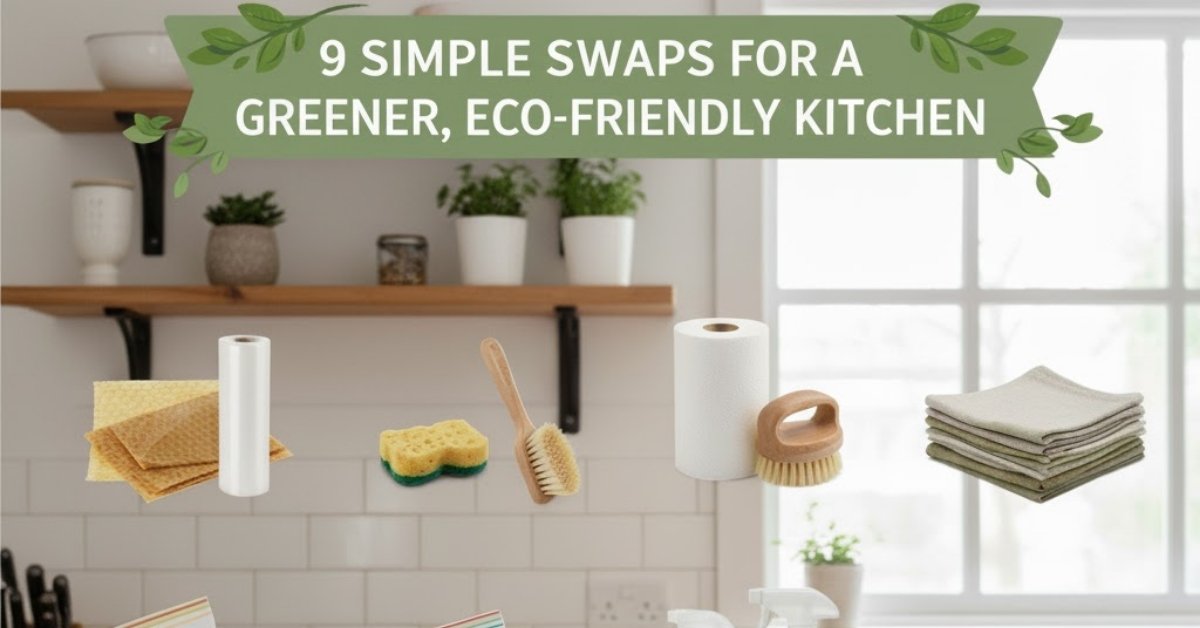
- Swap Paper Towels for Swedish Dishcloths: A single Swedish dishcloth can replace up to 17 rolls of paper towels. They are incredibly absorbent, you can toss them in the dishwasher or laundry, and they are fully compostable when they finally wear out.
- Swap Plastic Sponges for Compostable Scrubs: Did you know most yellow-and-green sponges are made of plastic and shed microplastics down your drain? A compostable sponge (made from loofah, coconut fiber, or plant cellulose) works just as well and can be composted at the end of its life.
- Swap Plastic Soap Bottles for a Solid Dish Soap Bar: One solid dish soap bar can last as long as 2-3 bottles of liquid soap. It cuts grease effectively, comes in minimal paper packaging, and clears up that clutter under your sink.
2. Zero-Waste Food Storage (Goodbye, Single-Use Plastic)
This is where you can make the biggest dent in your daily plastic waste. Storing food doesn’t have to mean wrapping it in plastic.
- Swap Plastic Wrap for Beeswax Wraps: These are reusable, washable, and breathable. You use the warmth of your hands to mold them over a bowl, a piece of fruit, or a sandwich. (Vegan, plant-based wax wraps are also a great alternative).
- Swap Ziploc Bags for Reusable Silicone Bags: Perfect for snacks, freezing, and even sous-vide cooking, a set of food-grade silicone bags (like Stasher bags) can replace hundreds of disposable baggies. They are durable and dishwasher-safe.
- Swap Plastic Tupperware for Glass or Steel Containers: While plastic containers stain and warp, glass and stainless steel containers last virtually forever. They don’t leach chemicals into your food, are easy to clean, and are perfect for storing leftovers.
3. Eco-Friendly Cooking & Brewing Essentials
Even our cooking and daily coffee habits can get a sustainable upgrade with these simple reusable kitchen items.
- Swap Plastic Utensils for Bamboo or Wood: Plastic spatulas and spoons can melt and even release microplastics into your food when heated. A set of bamboo or wooden utensils is non-toxic, durable, and won’t scratch your non-stick pans.
- Swap Plastic Cutting Boards for Wood or Bamboo: Studies have shown that plastic cutting boards can be a significant source of microplastics in our food. A solid wood or bamboo board is naturally antimicrobial, lasts for decades with proper care, and is a safer surface for your food prep.
- Swap Disposable Coffee Pods for a Reusable Filter: Your daily coffee habit creates a mountain of waste. The easiest fix is a reusable coffee pod that you can fill with your own grounds. Better yet, switching to a French press or pour-over system eliminates waste entirely (besides the compostable grounds!).
4. Are These Eco-Friendly Products Worth the Cost?
Let’s be honest: a set of silicone bags or beeswax wraps costs more upfront than a $4 box of plastic wrap.
The answer is a resounding yes. The key is to shift your thinking from cost to investment. You buy a roll of paper towels every few weeks. You buy a set of Swedish dishcloths once a year. A solid dish soap bar lasts for months. These eco-friendly products for the kitchen are designed for the long haul, saving you significant money over time by eliminating the need to constantly rebuy disposable items.
5. The Single Most Important “Swap”: Your Mindset
Here is the most important tip of all: Don’t throw everything out at once.
The most sustainable product is the one you already own. Don’t go to your kitchen and toss all your plastic containers just to buy new glass ones. That’s not eco-friendly; it’s just creating more waste.
Instead, adopt the “gradual replacement” method. When your plastic-bristle dish brush finally falls apart, replace it with a bamboo one. When you use up your last roll of plastic wrap, buy a set of beeswax wraps instead. This approach is better for the planet and for your wallet.
Conclusion
Creating a sustainable, eco-friendly kitchen isn’t an all-or-nothing project. It’s a series of small, intentional choices that add up to a big impact.
By starting with one or two simple swaps—like trading your paper towels for reusable cloths or your plastic wrap for beeswax wraps—you’re already on the right path to reducing waste, saving money, and building a greener home.